What should you send before a first sales meeting so you don't spend half of it introducing yourself?
Before a sales trip to Australia, I sent every prospect one email with a who-we-are article and a top-10 FAQ. More than half replied with their pains before we met. Here's the template you can send this week.

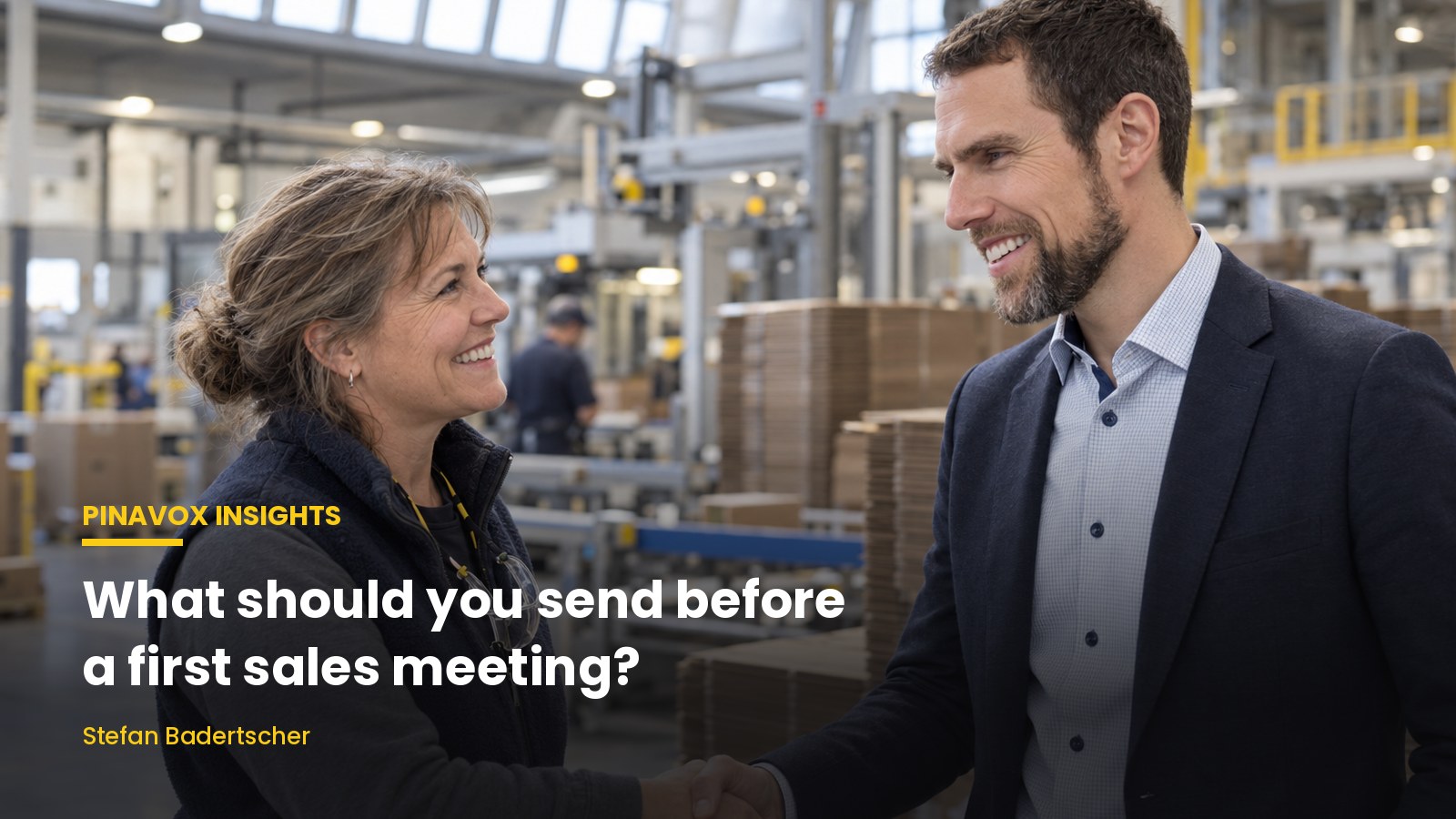
Stefan Badertscher greeting a plant owner on the factory floor before a first meeting. (AI-generated image)
How do most first meetings in machine sales start? “So, tell us about your company.” Then 20 or 30 minutes of slides about your history, your factory and your product range. By the time you get to the buyer’s actual problem, half the meeting is gone.
I lived that for years at IMPACK, where I sold packaging machines and ran revenue from 2017. Then, before a sales trip to Australia, I tried something different. I sent every prospect one email before we met.
Here’s the honest part: this won’t make a bad fit into a good one. What it does is make sure you find out faster, and spend the meeting on the buyer instead of on yourself. You can try it before your next first meeting, this week.
The short answer: About a week before a first meeting, send one short pre-visit email with three things: an article that explains who you are, a top-10 FAQ that answers the basics (where you build, warranty, service at a distance, how pricing works, how to prepare), and one question asking what they produce. Then open the meeting with a clear agenda. At IMPACK, this saved 20 to 30 minutes per meeting. If you’ve already had a phone call with the buyer, go one step further: say the assignment out loud on the call and repeat it in the email.
Why do first meetings start from zero?
Because the buyer knows almost nothing about you. They may have seen your website for two minutes. They don’t know where you build, how service works or whether you’re even in their price range.
So you explain. And while you explain, the buyer is quietly asking a different question: “Is this worth my time?” They don’t tell you about their real problem until they’ve decided you’re worth talking to.
The fix is simple. Answer the basic questions before the meeting, in writing, so the meeting can start with their problem. In PVOS this is part of the Authority Builder module. The method behind it is assignment selling from They Ask, You Answer. At IMPACK we had coaching on that framework, and I later adapted it for industrial, long-cycle sales.
What happened when we sent it before every visit?
Before my first trip to Australia, I had a series of in-person meetings lined up. I didn’t want to spend each one introducing IMPACK.
So before every visit, I sent the same kind of email: a “who we are” article and an article with the top 10 questions buyers usually ask us. Where we build the machines. Warranty. Service from far away. How our pricing is structured. How to prepare for the meeting. And I asked one question: what do you produce?
Here’s what happened:
-
More than 50% replied before the meeting with what they produce and what their problems were.
-
100% knew who I was when I walked in. Nobody asked “So what does your company do?”
-
Each meeting saved 20 to 30 minutes. Across 4 meetings in a week, that’s about 2 hours of extra selling time.
The meetings started where a second meeting normally would. That’s the whole idea: let the content do the introduction, so you can do the selling.
 A plant owner reading the who-we-are article and FAQ before a supplier visit, so the first meeting can start with his line instead of introductions. (AI-generated image)
What goes into a pre-visit package?
Three pieces. No more.
1. The who-we-are article (one page). Who you are, where you build, who you build for, how many machines are running in the field if you can say it, and what you don’t do. That last part matters. It tells the buyer you’re honest about fit.
2. The top-10 FAQ. Use this checklist and answer each one in 2 to 4 plain sentences:
-
Where do you build your machines?
-
What does the warranty cover, and for how long?
-
How does service work if we’re far from you?
-
How fast can a technician be on site, and what can you fix remotely?
-
How is your pricing structured (standard machine, options, installation, training)?
-
What’s a typical lead time from order to a running machine?
-
What do you need from us to make a first proposal?
-
Who will we work with after the order?
-
What kind of plants and products do you usually work with?
-
How should we prepare for the first meeting?
If you already keep a list of your top buyer questions, take them from there. If you don’t, here’s how to capture them.
3. One question. “Could you tell me what you produce, and what you’d most like to improve on your line?” One question. Easy to answer. It’s what got more than half of the Australian prospects to reply.
What does the pre-visit email look like?
Here’s a template. The company names, dates and details are an illustration. Replace them with your own.
Subject: Before our meeting on Tuesday, November 10
Hi Ms. Novak,
I’m looking forward to visiting your plant on Tuesday, November 10, at 10:00.
So that we can spend our time on your line instead of on introductions, here are two short reads:
- Who we are (3 minutes): where we build, who we build for, and what we don’t do.
- The 10 questions plants ask us first (7 minutes): warranty, service at a distance, how pricing works and how to prepare.
One question, if you have a minute: what do you produce, and what would you most like to improve on your packing line? Even two lines help me prepare the right examples.
See you on Tuesday,
[Your name]
[Phone]
Notice what it doesn’t do. No brochure attachment. No “let me know if you have any questions.” Two named reads with honest reading times, and one easy question.
How do you open the first meeting?
Lead it. Buyers relax when someone has a plan. This is seller-led discovery: you set the agenda, then you listen.
A simple opening script:
“Thanks for making the time. Here’s what I suggest for the next hour. First, I’d like to understand your line and what you’d like to improve. You mentioned [their reply]. Then I’ll show you two or three examples that fit. At the end, we’ll agree whether a next step makes sense, and what it would be. Does that work for you?”
Then follow it:
| Part | Time (60-minute meeting) | What you do |
|---|---|---|
| Agenda | 2 minutes | Say the plan and ask if it works |
| Their situation | 25 minutes | Ask about the line, the problem, what they’ve tried, who decides |
| Fit | 20 minutes | Show only examples that match what they said |
| Next step | 10 minutes | Agree on one dated next step, or agree it’s not a fit |
| Buffer | 3 minutes | Questions |
If they read the package, you’ll notice it. Their questions start at a higher level. If they didn’t, give the 2-minute version of who you are and move on. Don’t punish them for it.
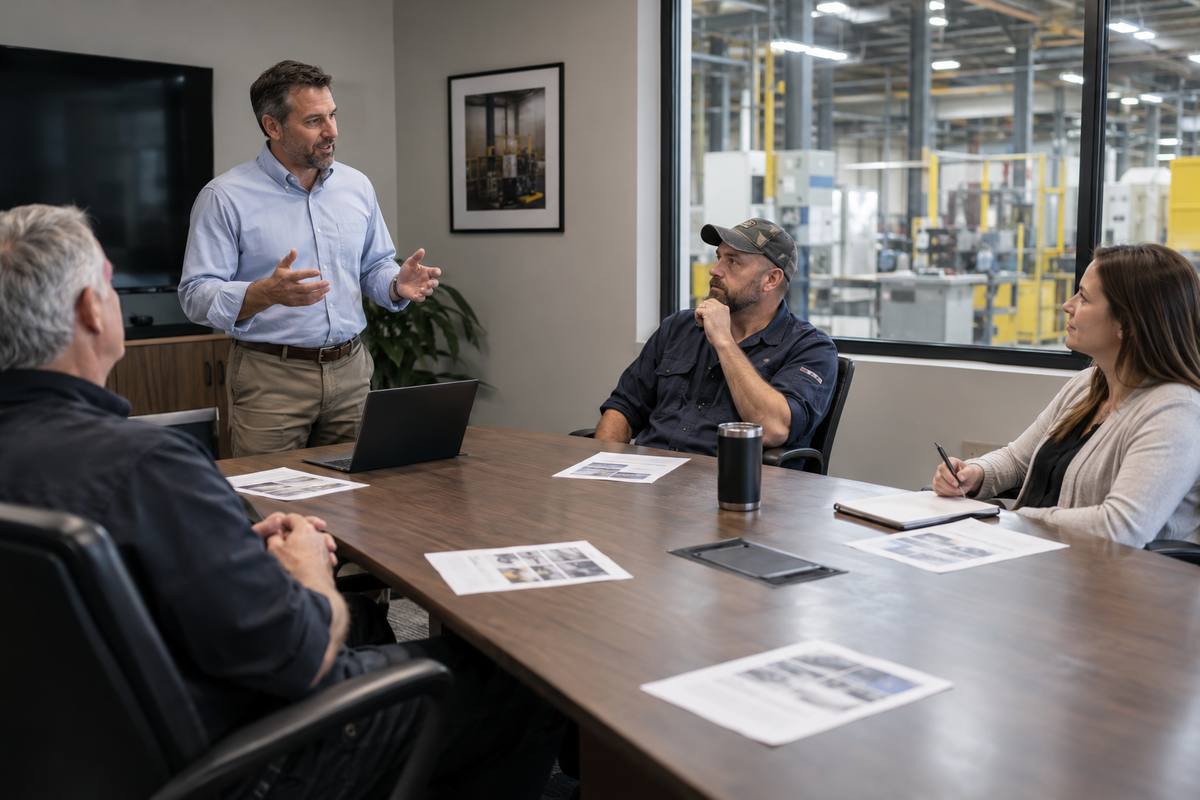 Opening a first meeting with a one-page agenda: the seller leads, then listens, and the buyer’s problem comes first. (AI-generated image)
How is this different from Assignment Selling, and why is there no assignment language in this email?
I get this question a lot, because in Assignment Selling I tell you to say the assignment out loud. So why doesn’t this email do that?
Because of how these meetings came about. In Australia, a partner organized the meetings for me. All I had were the attendees’ names and email addresses. I had never spoken to any of them. Writing “please read these before we meet” to someone who has never heard my voice would have felt pushy. So I kept the email light: two reads, one question, no assignment. And the result was still very impressive.
It’s different when I’ve already had a first phone call with someone. Then I use Assignment Selling language on that call. I say the assignment out loud: what I’ll send, why it matters and what I’d like them to look at before we meet. Then I make it very clear in the follow-up email, even before the meeting. They’ve already agreed on the phone, so the email just confirms it.
Here’s the simple rule:
-
No prior conversation: send the light pre-meeting package from this article.
-
Any prior call: use assignment language on the call, and repeat it clearly in the email.
What mistakes make buyers ignore it?
-
Sending a brochure instead of answers. A brochure says what you sell. The FAQ answers what they’re wondering.
-
Sending five attachments. Two reads and one question. That’s it.
-
No reading time. “3 minutes” gets opened. An unknown length gets postponed.
-
Asking ten questions. One question gets an answer. A questionnaire gets ignored.
-
Sending it the night before. A week ahead gives them time to reply.
-
Not using their reply. If they told you their problem, open the meeting with it. Otherwise they’ll wonder why they bothered.
Your exercise this week: look at your calendar and find the next first meeting. Write the pre-visit email using the template above. If your FAQ isn’t ready, answer the five questions buyers ask you most and send those.
Who shouldn’t bother with this?
Here’s the other side.
-
If the buyer already knows you well, a repeat customer or a referral from a close partner, skip the who-we-are article. Send only what’s new.
-
If you have no written answers at all, start with the FAQ, even a rough one. Don’t wait for a polished article.
-
If the meeting is a quick spare-parts or service call, this is too much.
-
If you don’t plan to change how you run the meeting, the email alone won’t help much. The value comes from starting with their problem.
So what’s the next step?
Before a first meeting, send one email with a who-we-are article, a top-10 FAQ and one question. Then open the meeting with an agenda and start with their problem.
If your first meetings keep turning into company presentations, you’re spending your best time on the part the buyer cares about least.
Send the pre-visit email before your next first meeting this week. Then keep going with the next stage: how to write the email that gets a buyer to do the homework.
At PINAVOX we train machine-builder sales teams on this as part of the Production Visibility OS. Your production runs on a system. Ours is built to feed it. If you want your team to lead every first meeting this way, book a strategy call with me.